Factory Relocation, Plant Relocation and Layout Revision
Move the line. Keep the schedule. We plan, dismantle, transport, reinstall, and recommission entire production facilities under one project plan and one accountable team — so your line is back online on the date you committed to.
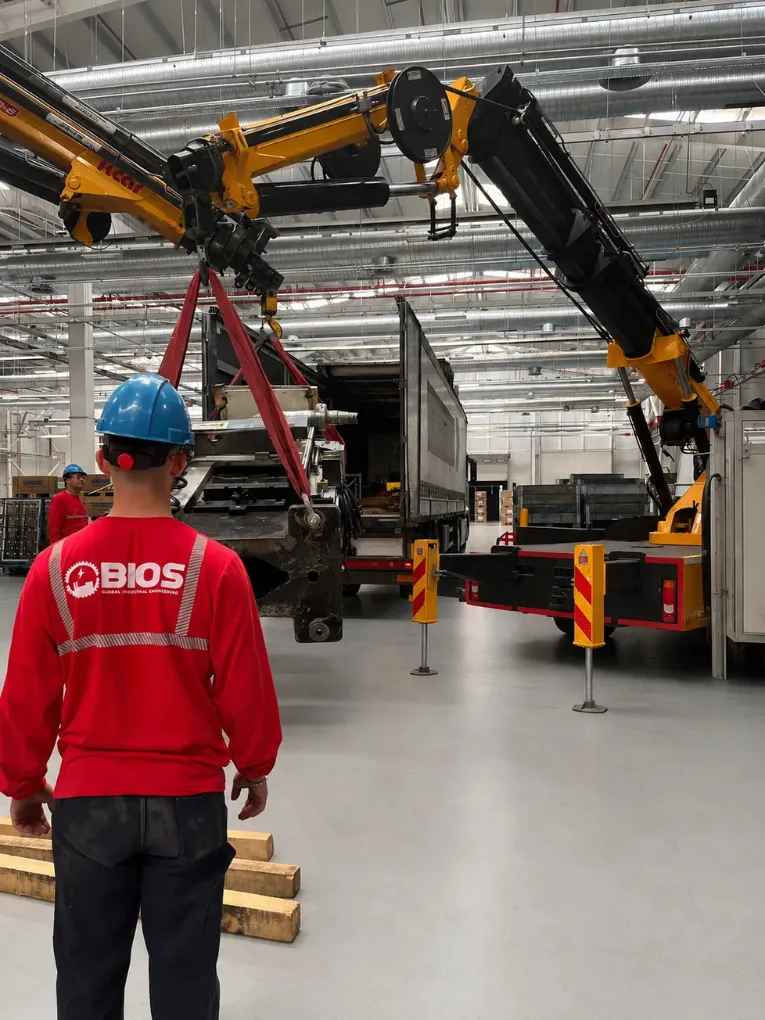
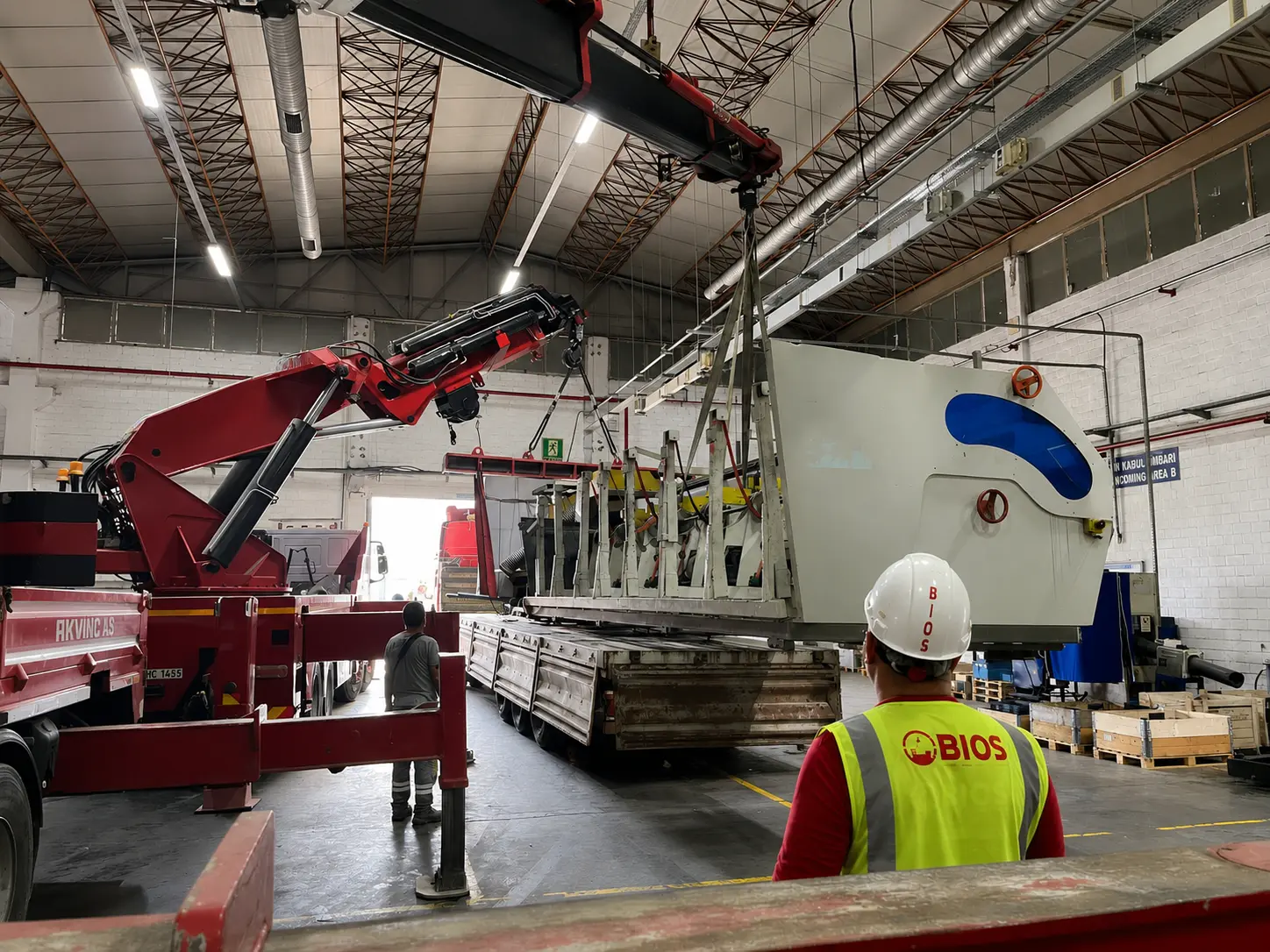
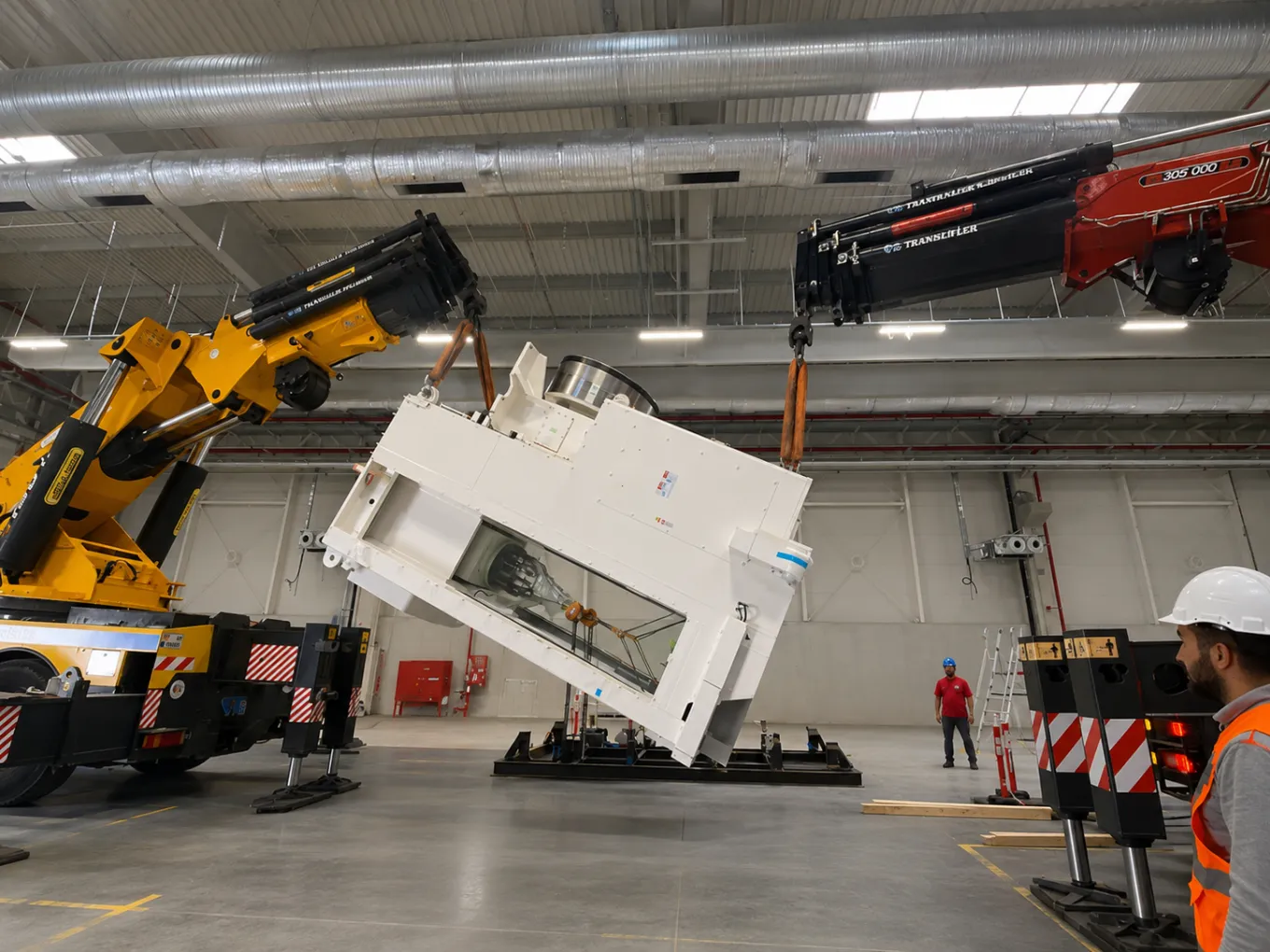


Moving a production line puts a factory's schedule, customer commitments, and cash flow on the line at the same time. A poorly planned teardown, a missing calibration record, or a delayed startup can cost far more than the move itself. We don't pass that risk down a chain of subcontractors. From the first site walk and dismantling sequence through transport, rebuild, and full startup, one BIOS team owns the project end-to-end.
Our own engineers handle the mechanical, electrical, control, and automation work in the field, alongside your maintenance, production, and engineering teams. Every project ends the same way: with a commissioning guarantee. Our crew stays on site until the line is running at the agreed cycle time and quality and every acceptance criterion has been signed off.
• Pre-teardown digital documentation, calibration data capture, and equipment tagging
• Engineered heavy lifts and rigging plans for oversized and high-tonnage equipment
• In-house mechanical, electrical, PLC, and robot programming on rebuild
• Customs, local permits, and international logistics handled under one contract
• Production validated against original acceptance criteria — backed by our commissioning guarantee
Six project types, one delivery model. Whatever the scale, we own everything from the dismantling plan through to startup.
Full Factory Relocation
A complete production facility, moved from one site to another: equipment, utilities, infrastructure, and documentation. To shrink total downtime, dismantling, transport, and rebuild run in parallel work packages.
Single Line or Cell Relocation
A production line, a robotic cell, or a stand-alone machine — moved within the same plant or to a new site. Scoped as a self-contained project that won't disrupt neighboring lines or your existing schedule.
Cross-Border Relocation
Equipment moves across Türkiye, Europe, North Africa, and the Middle East. Heavy haul, customs paperwork, import-export compliance, and on-the-ground coordination in multiple countries — all run from a single point of contact.
Plant Layout Revision
Same building, new flow. Before anything moves, we run flow analysis, cycle-time modeling, and 2D/3D layout planning. Then we execute the change on the shop floor.
Decommissioning and Disposal
Safe shutdown of lines that have reached end-of-life or are being closed down. Inventory control, controlled teardown, responsible disposal or used-equipment resale — including handover of the cleared floor area to the building owner, ready for reuse.
Reinstallation and Commissioning Only
Equipment that's already been moved or has been sitting in storage — reinstalled, hooked up, and commissioned. We work from your existing documentation or carry out a pre-installation site walk.
Industries We Serve
Field-tested in industries where production can't stop, equipment is complex, and restart dates aren't negotiable.
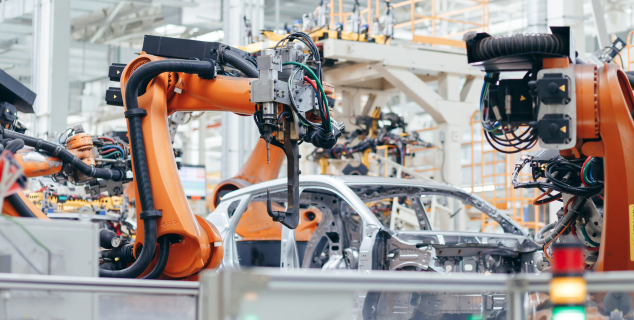
Automotive
Body welding lines, press shops, paint lines, assembly cells, and supplier plants. OEM and Tier-1.
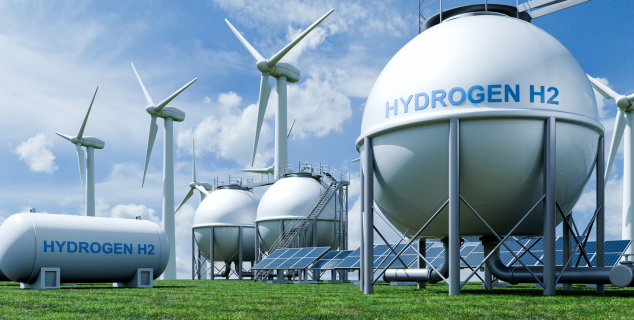
Energy
Turbines, generators, transformers, switchgear, maintenance lines, and industrial control systems.
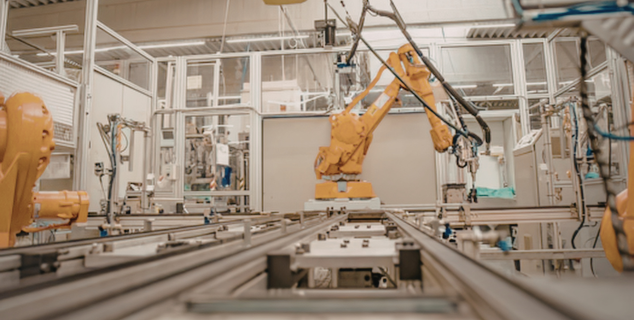
Home Appliances
Refrigerator, washing machine, oven, and air conditioner production lines; press, assembly, test stations, packaging, and end-of-line systems.
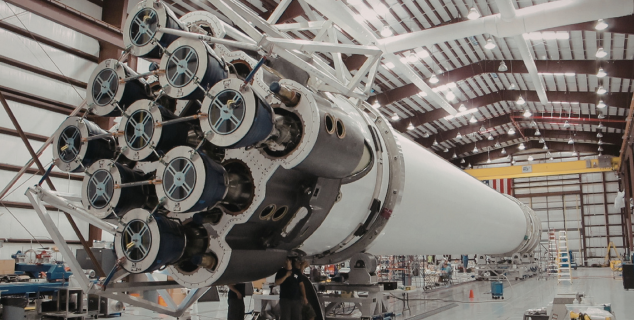
Defense Industry
Precision machining workshops, test and calibration facilities, restricted-access production lines, and assembly cells.
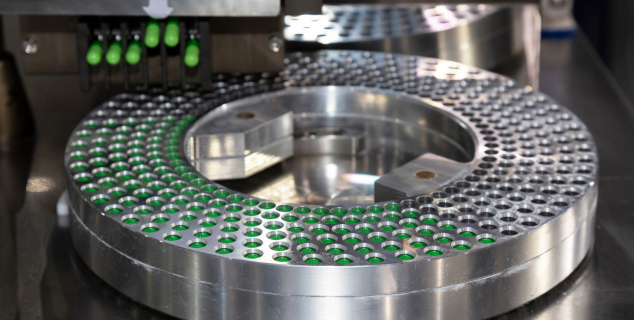
Chemicals
Reactors, mixers, filling and packaging lines, storage tanks, and process control infrastructure.
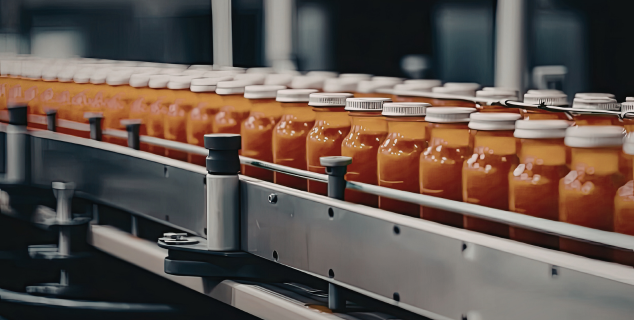
Food
Filling, packaging, and palletizing lines, sterilization units, confectionery and chocolate plants, and cold storage.
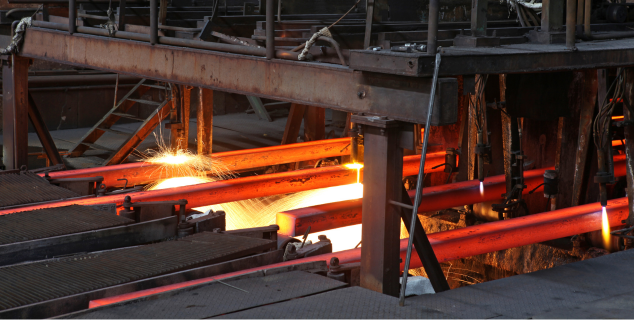
Metal & Mining
Rolling mill equipment, foundries, welding and cutting lines, heavy-tonnage presses, and end-of-line automation.
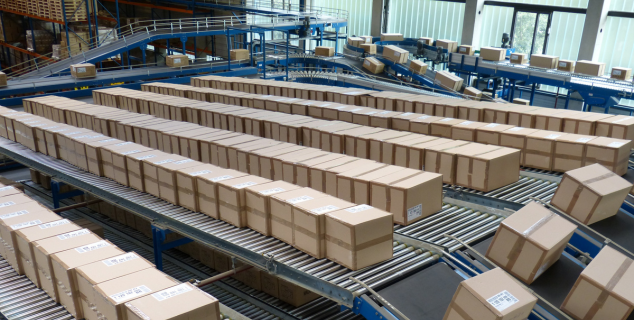
Paper & Packaging
Printing machinery, sheeting and cutting lines, palletizers, corrugated and flexible packaging plants.
Five stages, road-tested across more than 100 projects. Each one engineered around precision, safety, and minimum downtime.
Site Walk and Project Plan
We walk both the source and destination plants, document every piece of equipment and infrastructure, and build a schedule that fits inside your downtime window. Nothing comes apart on site until you've signed off the plan.
Methodical Teardown and Documentation
Teardown follows the sequence our engineers have built: mechanical separation, electrical isolation, every cable and component tagged. Critical settings, calibration data, and assembly references are photographed and logged digitally before dismantling begins, so nothing gets lost between teardown and rebuild.
Transport and International Logistics
Whether it's a short move across the yard or a multi-country shipment, we run the whole transport process. Equipment travels properly packed, secured, and tracked. Customs paperwork, transit permits, and insurance — all handled in-house.
Rebuild and Site Works
Equipment goes back together to the approved layout: alignment, leveling, anchoring, mechanical connections. Civil works — concrete, insulation, steel — are coordinated with local contractors or done by our own crew. Electrical, pneumatic, hydraulic, and cooling installations are rebuilt by their respective disciplines.
Commissioning and Restart
Every machine is brought back up to its original acceptance criteria. Robot programs are restored and verified, PLC logic checked, and a full production trial is run before handover. Our team doesn't leave until the line is running stably at target cycle time and quality. That's the commissioning guarantee.
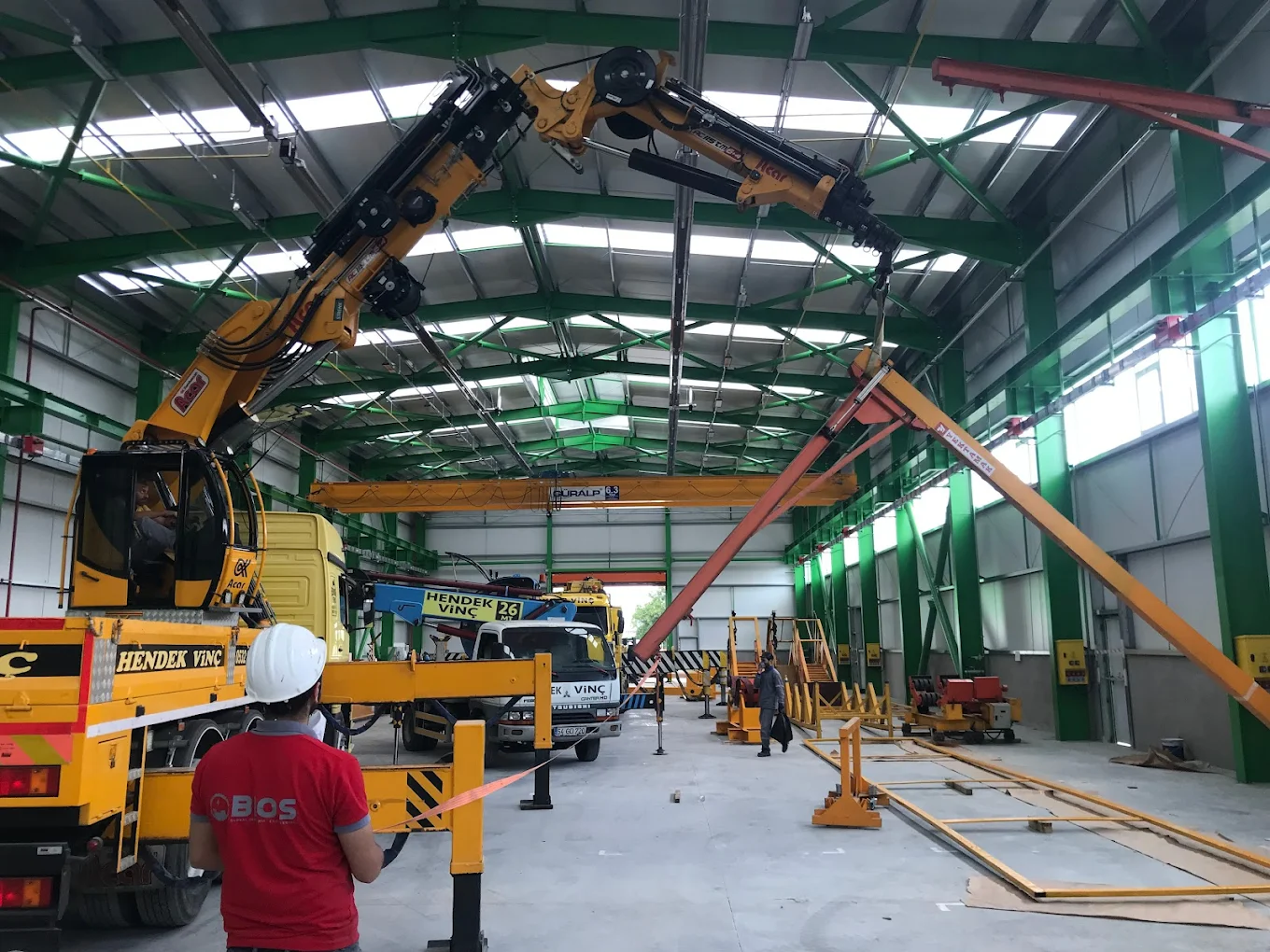
Yeniköy Body Plant — 28-Robot Door Line
Turnkey dismantling, rebuild, and automation of a 28-robot door line at the Yeniköy body plant. Design, manufacturing, mechanical, electrical, and commissioning all delivered by BIOS.
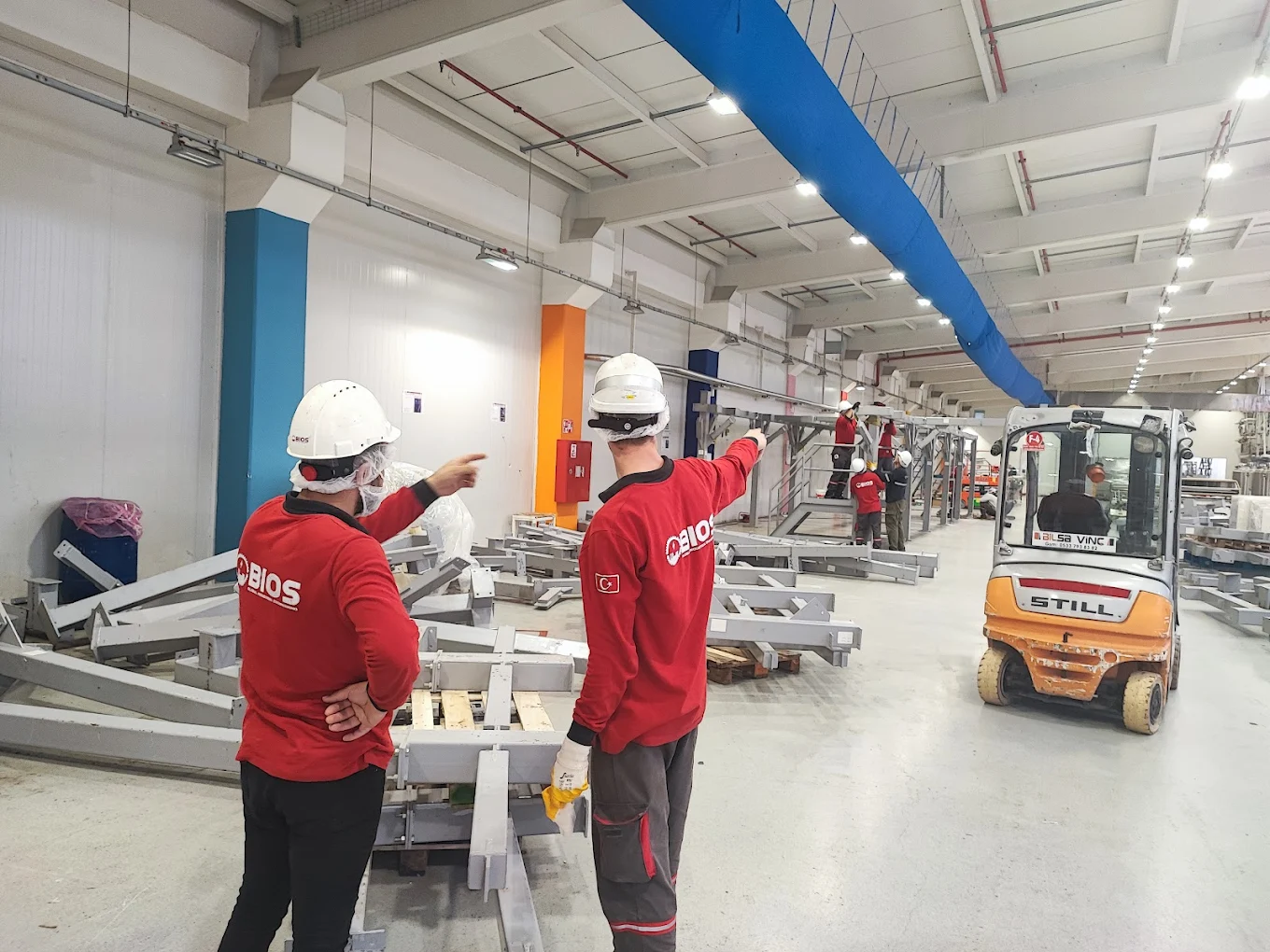
K0 Underbody — Teardown, Install, and PLC Programming
Old robot lines and fixtures stripped out after Doblo production wrapped, K0 robot lines installed to the new layout, automation panels revised, and PLC software rewritten to Tofaş standards.
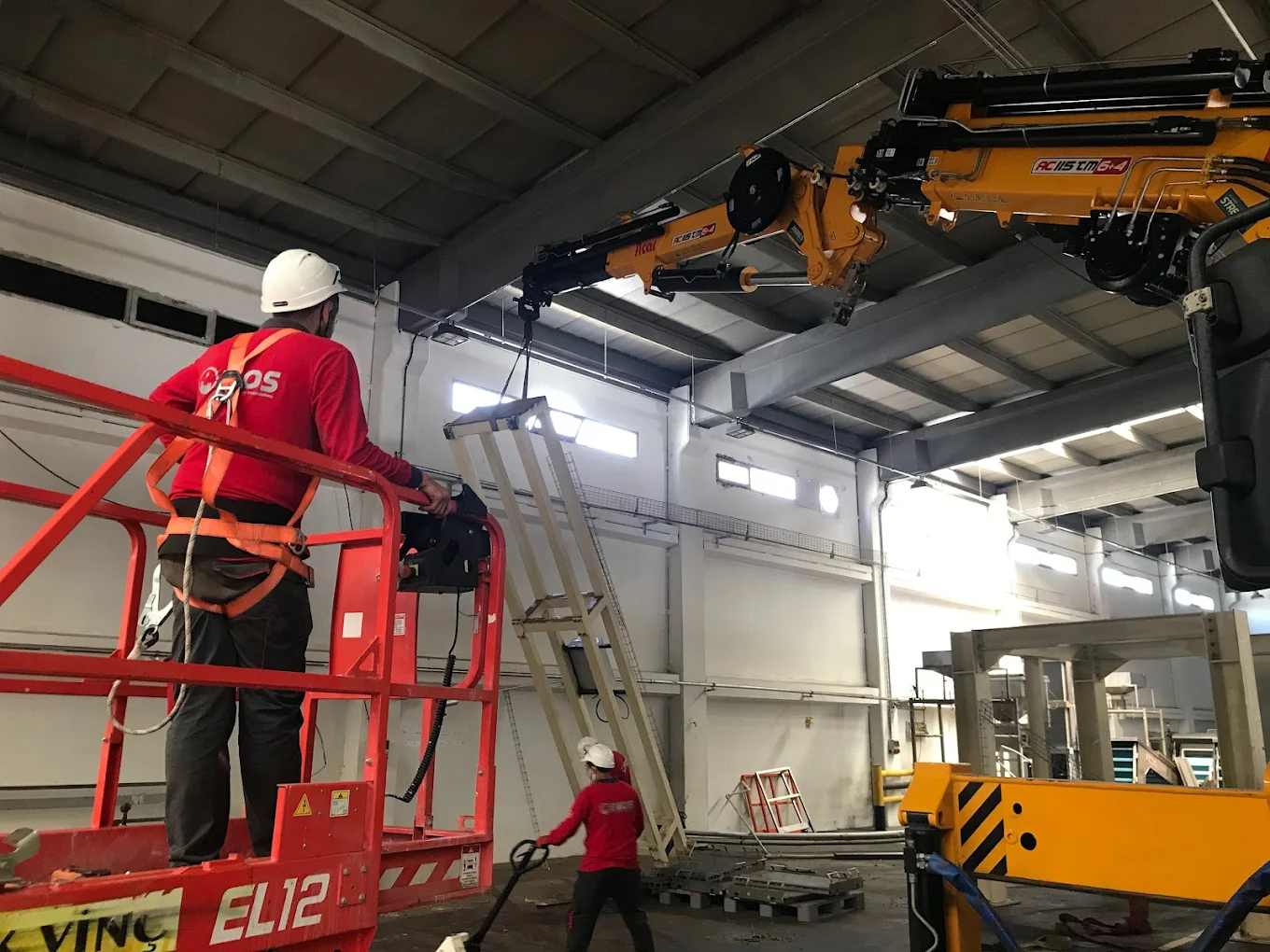
SIMPAC 1,200-Ton Press — Relocation and Install
Turnkey delivery of the 1,200-ton SIMPAC press: offloading from the truck, unboxing, install, electrical and mechanical integration, and commissioning.
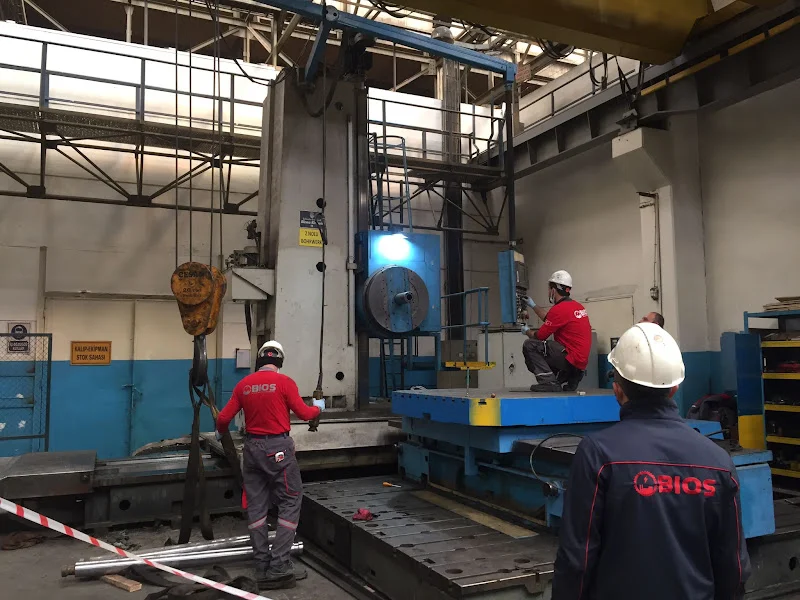
B460 Door Lines — Relocation and Tie-In
14 robots stripped from the left side and moved to the right, so the same line could run both left- and right-hand door production. Mechanical design, E-Plan revision, panel revision, PLC-HMI software, and robot programming included.
Factory relocation — sometimes called plant relocation — is the engineering service that covers the full lifecycle of moving a production facility: dismantling, transport, and reinstallation, commissioning, and validation of every machine, line, robot, fixture, conveyor, and piece of electrical infrastructure on site. It's typically driven by capacity expansion, a move to a lower-cost location, a shift into an organized industrial zone (OIZ), rent reduction, opening a domestic or international branch, or post-merger site consolidation.
It depends on plant size, equipment count, distance, and line complexity. A single-line teardown, transport, and rebuild can typically be completed in 2–3 months. Multi-line plant moves typically run 6 to 13 months. Real numbers from our recent projects: the SIMPAC 1,200-ton press — dismantling, heavy haul, install, and commissioning — delivered in 2 months. An ASRS (Automated Storage and Retrieval System) relocation including dismantling, transport, mechanical install, automation, and commissioning, also 2 months. Larger jobs like the Ford Yeniköy 28-robot door line and the Tofaş K0 line typically land in the 6-13 month range.
Heavy moves are planned by tonnage class. Up to 50 tonnes: forklifts, pallet trucks, and skating systems. 50 to 500 tonnes: hydraulic jacking, Self-Propelled Modular Transporters (SPMTs), and mobile cranes. Above 500 tonnes: specialised low-bed trailers and engineered lift plans. We delivered the SIMPAC 1,200-ton press end-to-end on this approach. Every move starts with a centre-of-gravity calculation, a rigging plan, and a floor-load distribution analysis prepared before anyone touches the equipment.
Yes, turnkey from start to finish. Scope includes: marking and documenting the existing line, mechanical teardown, electrical disconnection and cable tagging, draining of compressed air and hydraulic lines, packing and transport, mechanical install at the new site, electrical wiring, panel install, PLC and HMI software revision, robot programming, automation integration, dry-run testing, commissioning, operator training, and documentation handover. We delivered BMC's powder-coating chip-removal line on this exact scope, and the Ford Yeniköy 28-robot door line on a full turnkey package covering design, manufacturing, mechanical, electrical, and automation.
In Türkiye, a factory relocation typically involves: business opening and operating licence (for the new address), GSM (non-sanitary establishment) licence, EIA (Environmental Impact Assessment) report or EIA exemption, environmental permits, building occupancy permit, fire authority compliance report, industrial registry update, capacity report update, and OIZ management approval where applicable. For international moves, you'll need customs declarations, temporary export-import records, and ATA Carnets in some cases. Our engineering team supports your permit applications by supplying the technical project file, equipment list, and layout plan.
Yes. Across Türkiye, we run factory relocation projects in automotive, white goods, and defence industry plants — primarily in Bursa, Kocaeli, İstanbul, Sakarya, Eskişehir, and Ankara. For international projects, our Hamburg office handles operational support across the European market. Cross-border scope covers customs procedures, international transport permits, compliance with destination-country technical standards (CE, EN, IEC), and commissioning to local regulations.
A layout revision is a reorganization inside the same building — improving production flow, adding a new line, or repositioning equipment for better efficiency. A factory relocation moves the equipment to a different address. The work is similar in both — teardown, transport, rebuild, commissioning — but a layout revision involves tighter logistics and far more pressure on downtime management. On the Ford Otosan B460 project, we ran a layout revision: 14 robots moved from the left side of the line to the right. On the Tofaş K0 project, we tore down and rebuilt an entire line — 103 robots, 40 fixtures, 15 conveyors.
Downtime is a direct cost line on a relocation project, so we engineer the schedule around it. That means a detailed teardown-transport-rebuild timeline built during engineering, a Critical Path Method (CPM) analysis, equipment sequenced by priority, weekend and off-shift work blocks, parallel work packages, and the new site's infrastructure (flooring, electrical, compressed air, water) finished before teardown starts. Where it makes sense, we keep production running on a backup or interim line until the equipment lands at the new address.
Yes. We take reference measurements before teardown, fit vibration and shock data loggers for transport, use protective packaging, and run the truck on shock-absorbing mounts. After install, equipment is realigned to the manufacturer's tolerances using laser alignment, geometric accuracy testing, and recalibration. On robot lines, teach points (TCPs) and programs are backed up before the move and verified through commissioning tests after rebuild.
Before the project starts, we do site visits at both the existing and destination plants, a full equipment inventory with weight and volume analysis, new-site layout design (2D and 3D), floor load-bearing capacity checks, electrical infrastructure sizing (kVA, panels, cable cross-sections), compressed air and water planning, crane-forklift-platform requirement assessment, transport route analysis (bridge clearances, road widths, legal vehicle limits), risk analysis, and a detailed schedule. The result is a clear breakdown of investment cost, expected production downtime, and delivery date.
The biggest cost drivers are: total weight and volume of equipment, distance (domestic or international), labour and time on teardown and rebuild, specialised lifting and transport gear (mobile cranes, SPMTs, low-beds), protection requirements for precision equipment, infrastructure works at the new site (flooring, electrical, compressed air), PLC and robot programming hours, commissioning duration, insurance, and permit and customs costs. A reliable cost estimate can only be produced after a proper feasibility study — ballpark figures based on incomplete information rarely match the actual budget.
The deepest experience is automotive — Ford Otosan, Tofaş, Toyota, BMC, and Otokar. Door lines, body plants, assembly lines, suspension lines, and robotic cells, all on a teardown-transport-rebuild scope. We also run active projects in white goods, food, chemicals, defence, energy, metal and mining, and paper and packaging. On the heavy-relocation side, the SIMPAC 1,200-ton press and the ASRS system are key references — both delivered end-to-end through teardown, heavy haul, install, and commissioning.
Talk to Our Engineers
Send us the brief. We'll come back within 24 hours.
Planning a Factory Relocation or Layout Change?
The earlier our engineering team is in the conversation, the better we can protect your schedule. Get in touch to talk scope, timeline, and how we keep downtime to a minimum.